
Automate, Delegate, Or Keep? How Melanie Decides.
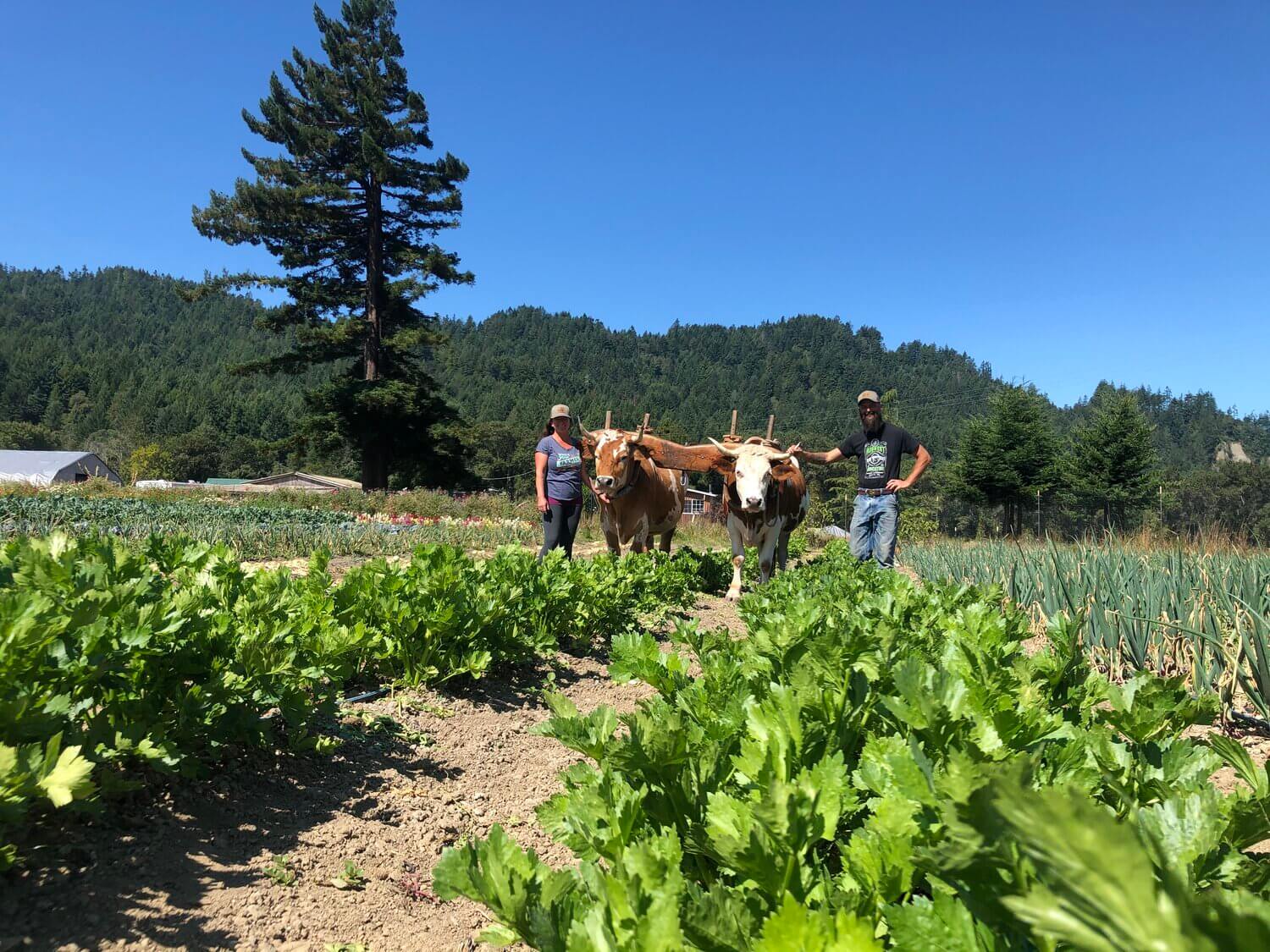
Shakefork Community Farm (Carlotta, CA) tills with oxen.
Kevin Cunningham drives three trained teams. They shape beds, hill potatoes, and move livestock. The farm's own name for the arrangement is "solar-powered, 8 hoof drive." All of the farm's fertility comes from compost made on site with ox manure, and the ground has been Land to Market EOV verified five years running.
Nobody chooses oxen because it's faster. You choose oxen because of what the pace does to the soil, to the animals, and to the work. It's a deliberate decision about where slowness is worth paying for.
Which makes Shakefork an unusually clear place to ask a question every CSA farmer eventually faces: if some things are worth doing slowly and by hand, which things aren't?
Melanie Cunningham grows the vegetables and runs the CSA — up to 160 households, 21 weeks of harvest, eight pickup sites across Humboldt County, plus on-farm apprenticeships that train the next generation of growers. She's spent the last several years sorting the farm's office work into three piles. Here's what ended up in each.
Automate: the work that was never the point
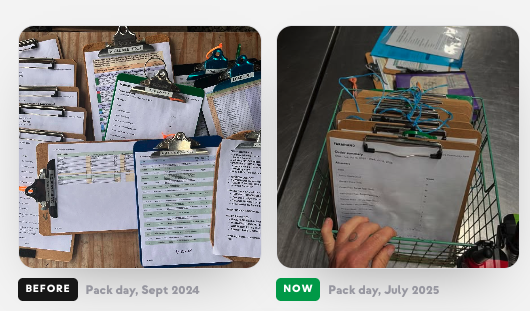
For years, the CSA lived in spreadsheets.
"So much of the farm was living in spreadsheets — payments, pickup sites, member changes, fulfillment details. As we grew, it stopped feeling organized and started feeling like something I had to constantly babysit."
The tell wasn't the hours. It was that the tool had started making decisions:
"I was aligning my work to my spreadsheet, limiting the number of memberships and pickup locations based on what my spreadsheet could handle."
That's the moment worth naming, because it's the one most farmers recognize late. A spreadsheet doesn't announce that it has become the constraint on the business. It just quietly caps how many members you take and how many sites you run, and it feels like caution rather than a ceiling.
The other cost was accuracy:
"Once you add in special orders and individual requests, it becomes very error-prone. I was starting to make a lot of mistakes."
What got automated: signups, payment tracking, fulfillment paperwork — labels, packing reports, pickup reminders — and the renewal campaign. Melanie's weekly admin load went from 12+ hours to under two.
None of that work was ever the reason she farms. It's arithmetic and logistics, and it's the kind of thing that gets better when a machine does it, not worse. Unlike tillage.
Delegate: the work someone else can do better
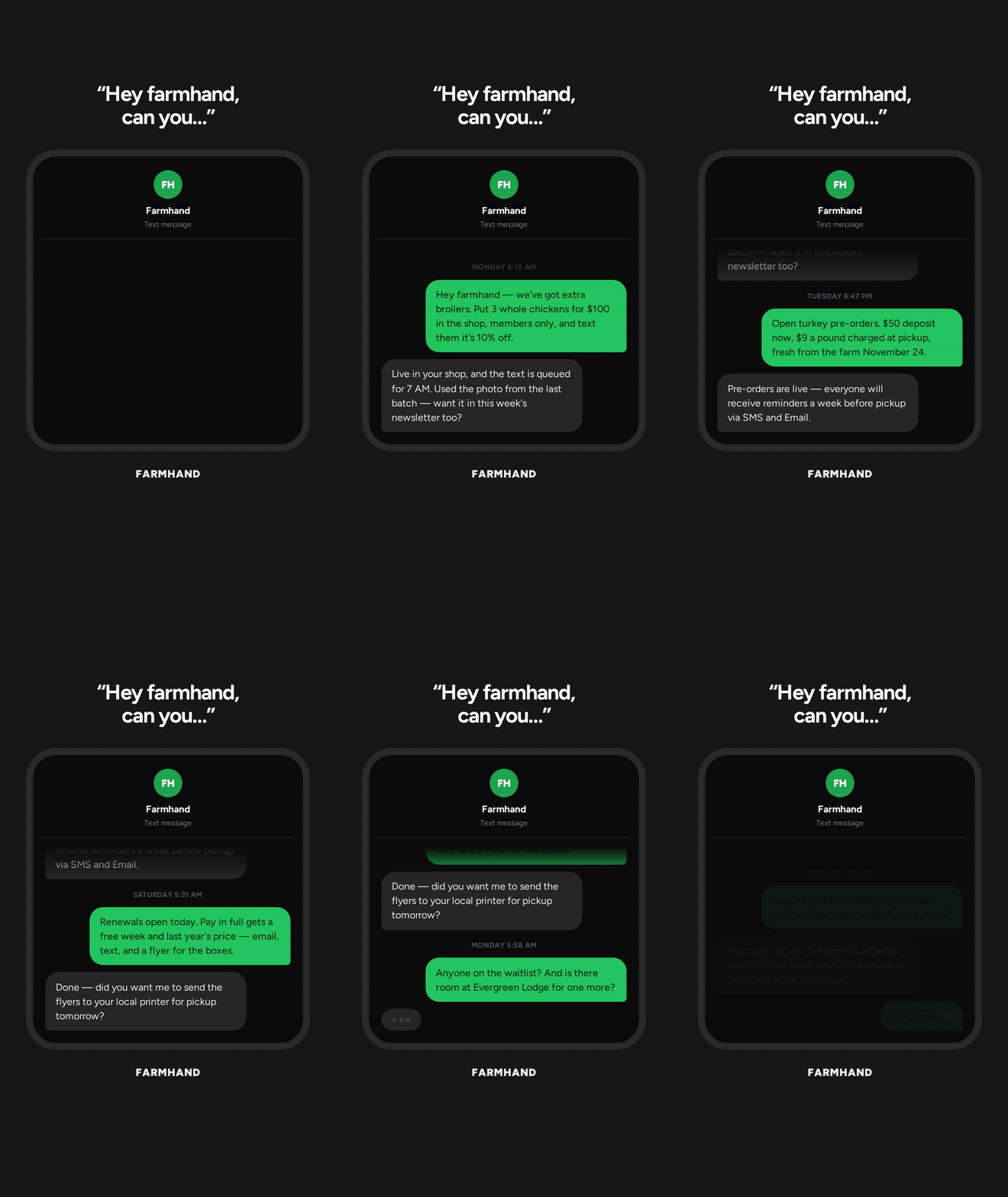
The second pile is the more interesting one, because most of it didn't go to a person. It went to the members themselves.
Holds, swaps, address changes, pickup location switches — all of it moved to self-serve. Members handle their own account changes instead of texting, DMing, and emailing Melanie about them.
"This is the first year I wasn't answering all those little questions. It's a huge mental timesaver."
Note what she calls it: a mental timesaver. Customer support was over seven hours a week on its own, but the hours undersell it. Fielding a hundred small interruptions across three inboxes doesn't just consume time, it fragments attention — and fragmented attention is what produces the mistakes she mentioned above.
The second thing she delegated was to her crew. Once the CSA's information lived somewhere other than Melanie's head and Melanie's spreadsheet, other people could actually pick up the work. A system only one person can operate isn't a system. It's a dependency.
Keep: the work that is the point

Here's the part that makes the whole framework hold together.
"I know how much personal attention matters in a CSA. We average a 90% retention rate, but it's closer to 100% where Kevin and I are present at pickup sites. Now I have time to write custom notes, check in with members, and build relationships."
Read that twice. She has measured the value of showing up in person — and leading on farm operations, so production continues to hit the high bar.
So it stays. Not out of sentiment, but because the numbers say it's the best use of an hour that Melanie has.
"I love being accountable to my members. They make me want to be a better farmer — and I am, because I know the faces and families I'm growing for. That gives meaning back to what we do each and every day."
This is why "buy back your time" is only half a sentence. Time bought back has to get spent on something, and the whole exercise is pointless if it just gets absorbed into more admin. Melanie spent hers on the pickup sites, the handwritten notes, and the relationships — and the retention followed. One renewal campaign, built on that goodwill, brought in over $40,000 in two weeks.
The sorting rule

Shakefork grew from 15 members to as many as 160 households. The farm still tills with oxen.
Both of those facts come from the same decision, made over and over: be deliberate about the work that compounds, and ruthless about the work that doesn't.
Draft animals for the soil. Software for the spreadsheet. Melanie at the pickup site on a Wednesday afternoon, learning the names of the families she feeds.
"I feel so supported as a farmer with Farmhand. I finally have the systems to match the farm we've built."
Want Melanie's renewal playbook?
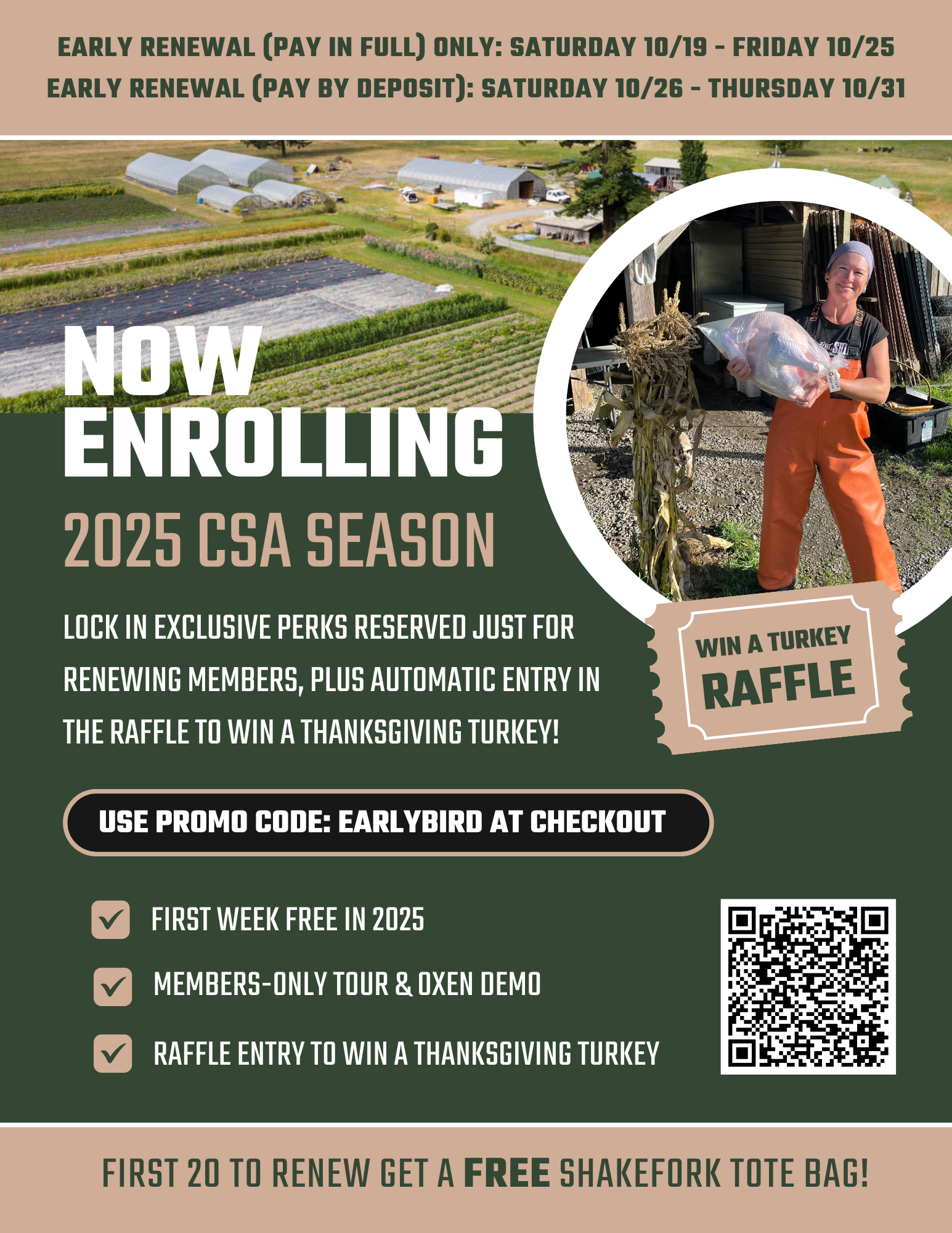
She recorded a full workshop on the campaign that brought in over $40,000 in two weeks — how she structured the offer to reward her most loyal members, where the deadline sat, and the multi-channel push behind a 70%+ early renewal rate. It comes with her renewal campaign calendar and copy/paste email, SMS, social, website, and print templates.
👉 Watch it free and download her templates
Or try the sort on your own operation
List everything the office side of your farm asked of you last week, then put each item in one of three columns — automate, delegate, keep. Most farmers find the keep column is the shortest one, and the one they've been protecting least.
If you want help moving things out of the first two columns, book a 15-minute look at how Farmhand handles them.
💌 Want tips like this every week? Get our newsletter.
Related Content
Get the story in your inbox every week.
Real success stories from working CSA and dairy farms–delivered every week (free).
Read by 5,000+ farmers every Friday