
The Ad Platform No Farm Is Using
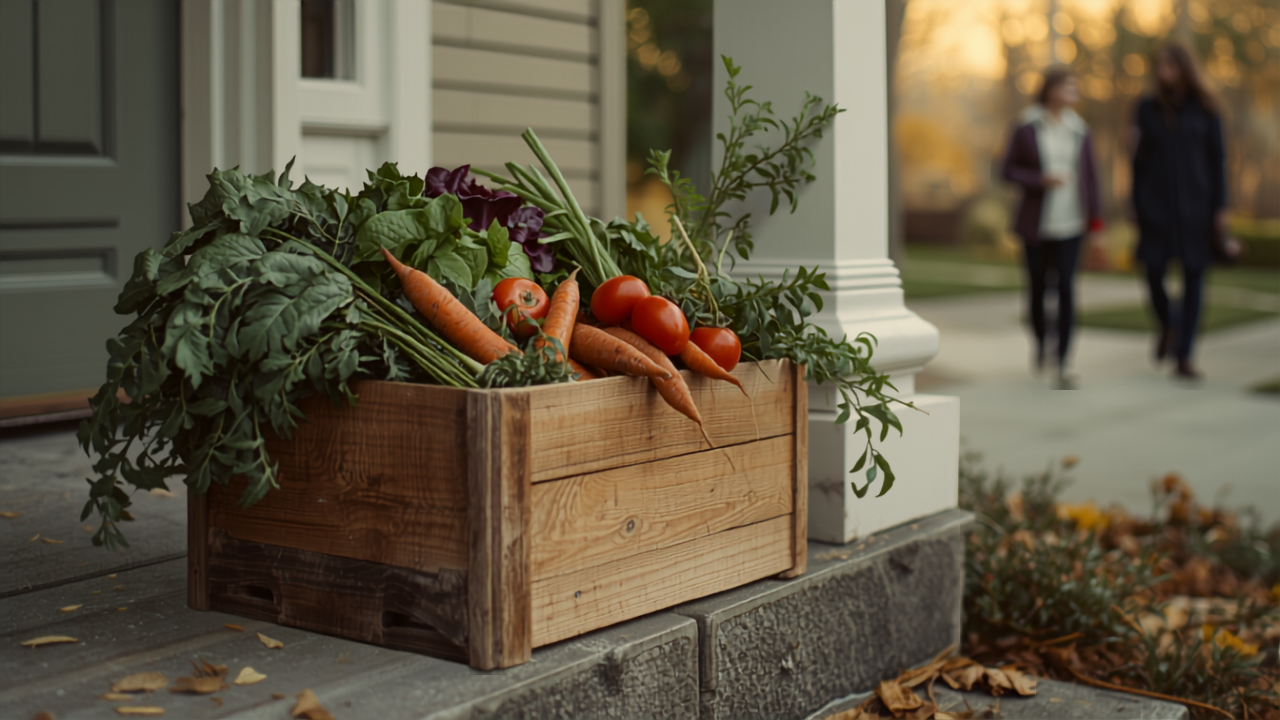
JR Organics is a 40-year certified organic farm in Escondido, CA — three generations of family, a CSA that's run for two decades, and a booth at seventeen farmers' markets across Southern California. They already had the playbook most farms dream about: daily Instagram, weekly recipes, farm tours, a packed market schedule. What they wanted was simple. More neighbors finding out they exist.
So we ran an experiment for them — six weeks of ads on a platform almost no farm bothers with.
Nextdoor: the neighborhood app where people find plumbers, complain about coyotes, and ask where to get good tomatoes.
It wasn't a straight line. Nextdoor is far pickier than Meta about what it'll run — where Facebook waves most creatives through, Nextdoor rejected our first several outright for sounding too much like ads. That's the platform guarding its neighborly feel, and it turned out to be a clue about what actually works. Once we stopped fighting it, we found the formula. The first couple of weeks were ugly — good clicks, almost no signups (we'll get to why). Then it clicked. By the end of the six weeks the campaign was bringing in new members every week like clockwork — around two a week, at about $35 to acquire a member worth $644.43 a year. Roughly $18.40 back for every $1 spent.
Good numbers. But they're not the reason to pay attention.
What a local ad is actually for
Most of us think of an ad as a net. You throw it out, you catch strangers, you convert them fast. Judge it by how many signups came back this week.
Nextdoor doesn't work like that, and once you see why, it changes what you run.
Here's a real signup from one week of the campaign:
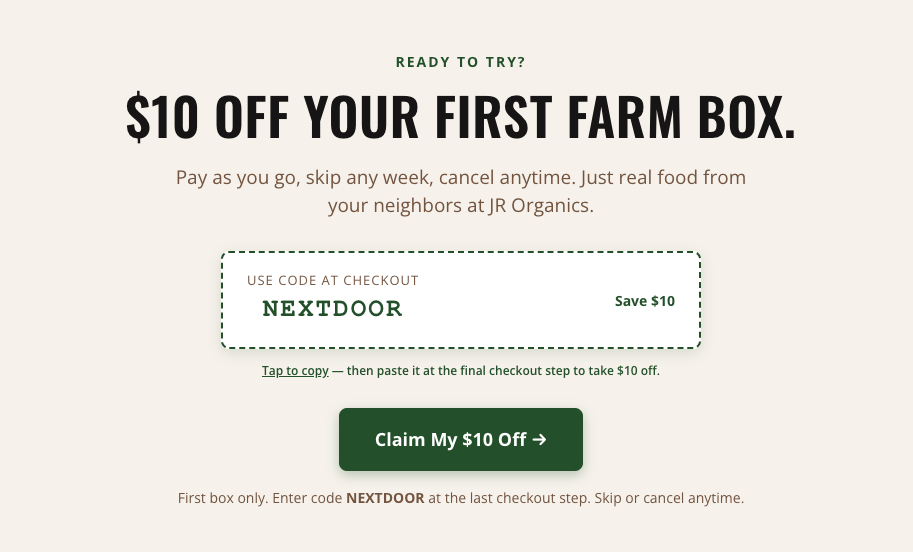
"I saw a code on Nextdoor for $10 off my first order… I've been interested in JR Organics for a while — visited the farm a couple times with a tour group — but just discovered there's a drop-off point in Fallbrook. Happy to finally get hooked up with your CSA."
The ad didn't create the desire. Farm tours and twenty years of showing up did that. The ad was the last step — an offer, plus the discovery that her neighbors were already picking up nearby.
That's the mechanism. Nextdoor harvests trust you've already planted in your community. It doesn't plant it for you.
And every person it converts isn't just a customer — she's a neighbor. Her box lands on a porch the whole street walks past. She's the one who answers the next "where do you get good tomatoes" thread. Two new neighbors a week don't just add revenue. They add reach on the exact blocks you already deliver to. That compounds in a way a one-off sale never will.
For herdshare and dairy operations, that reach is worth even more. A neighbor who vouches for your raw milk to a skeptical block is doing the education you'd otherwise be doing one nervous email at a time — and a pickup a few doors down is often the whole reason someone finally commits to a share.
Which is the deeper reason Nextdoor fits farms so well. Everything the platform runs on — local recommendations, neighbor trust, "who around here does this?" — is what a farm already is. A national brand has to fake being local here. A farm just has to show up.
So the question isn't "how many did it convert this week?" It's "did the right neighbors meet us?" Here's what we learned about making that happen — five things, in the order Nextdoor walks you through them.
1. Targeting: small is the strategy.
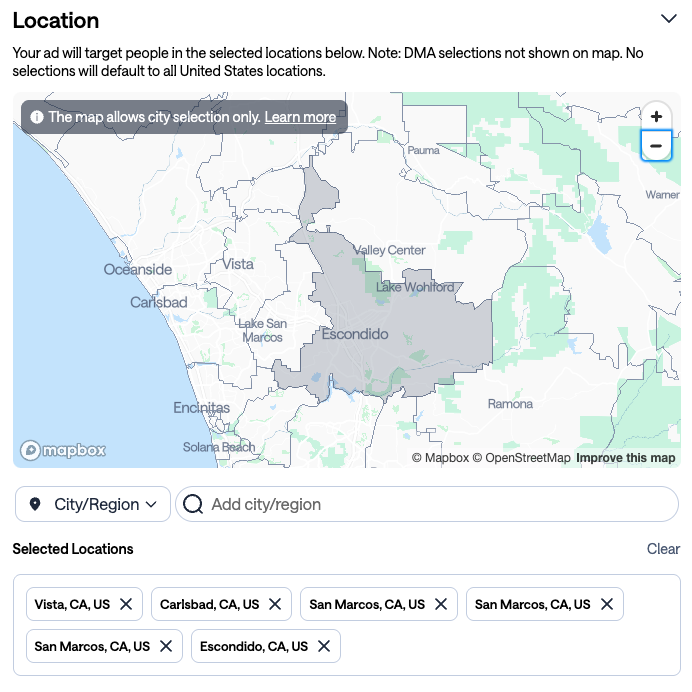
Set a 3–5 mile radius around your delivery zips. Not the metro. Not the county. The blocks you actually drive to.
Everywhere else, a small audience is a weakness. On Nextdoor it's the entire point. You want the same few thousand households seeing you again and again until you're the obvious answer — not a wide net of people who'll never see a pickup spot near them. Condensed beats broad.
2. The headline: plain, local, and a little boring.
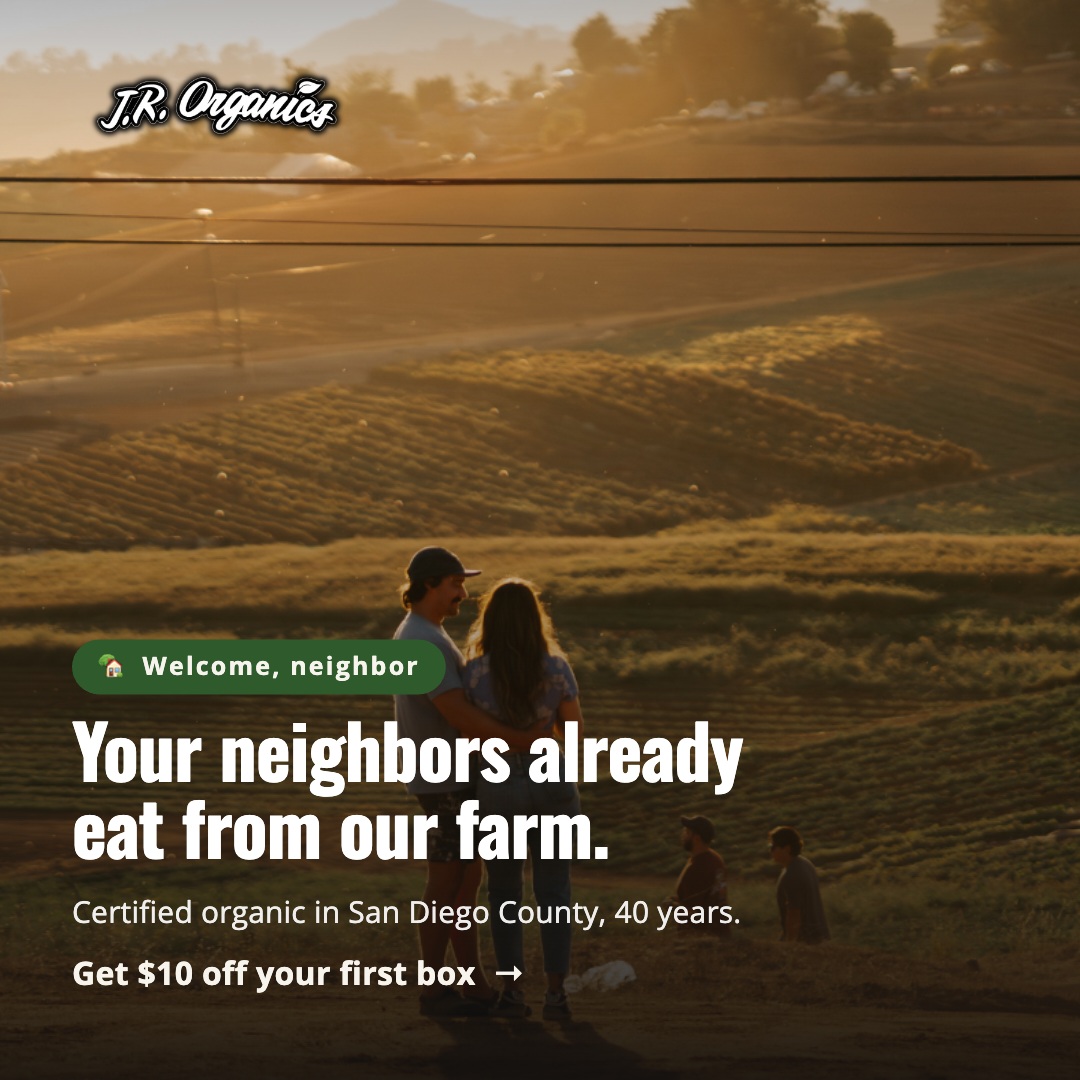
Our best lines, by a wide margin:
"Picked this morning. Not last week."
"Your neighbors already eat from our farm."
They hit a 2% click rate. Nextdoor's average is 0.2–0.55%.
The winning ads all did the same three things: they said what, not why. They used the geography ("near you," "your neighborhood"). And they stayed short — scrollers scan, they don't read. Boring beats clever, and on Nextdoor, local beats everything.
3. The copy: sound like a neighbor, not an advertiser.
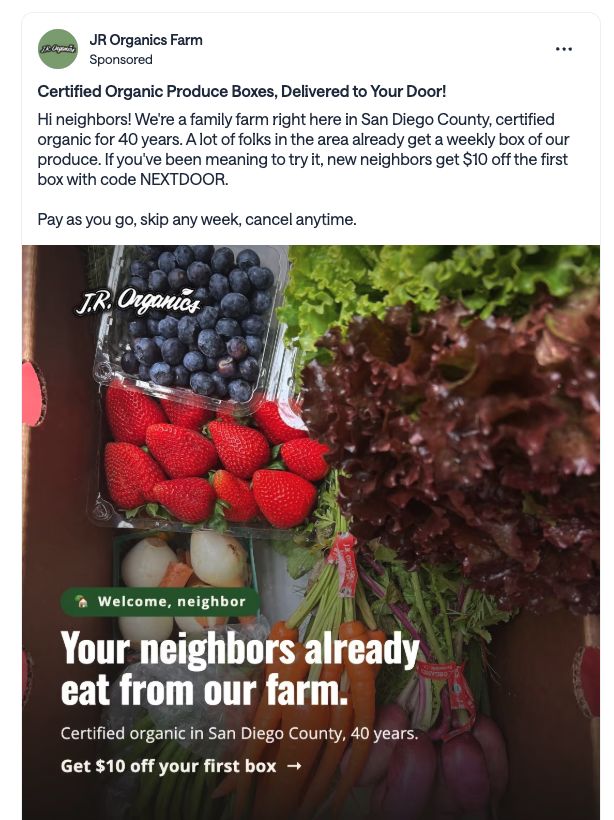
Write it the way you'd say it over the fence, first person:
"We're a family farm right here — we drop fresh organic boxes in your neighborhood every week."
Nextdoor actively rejects anything that smells like marketing. We had four creatives die in review before one ran. That's not a bug — it's the platform protecting the neighborly tone that makes it work. Lean into it. And be honest about the offer: pay as you go, skip any week, cancel anytime beat "no subscription required!" — because it's simply true.
4. The image: a real photo

One iPhone photo of this morning's harvest on a table in real light.
Nothing glossy. The Nextdoor feed is porch photos and lost-dog posts. A studio shoot in that feed is a stranger at the block party — everyone can tell. The rougher, realer image wins every time.
5. The link: make sure you have tracking you can trust.
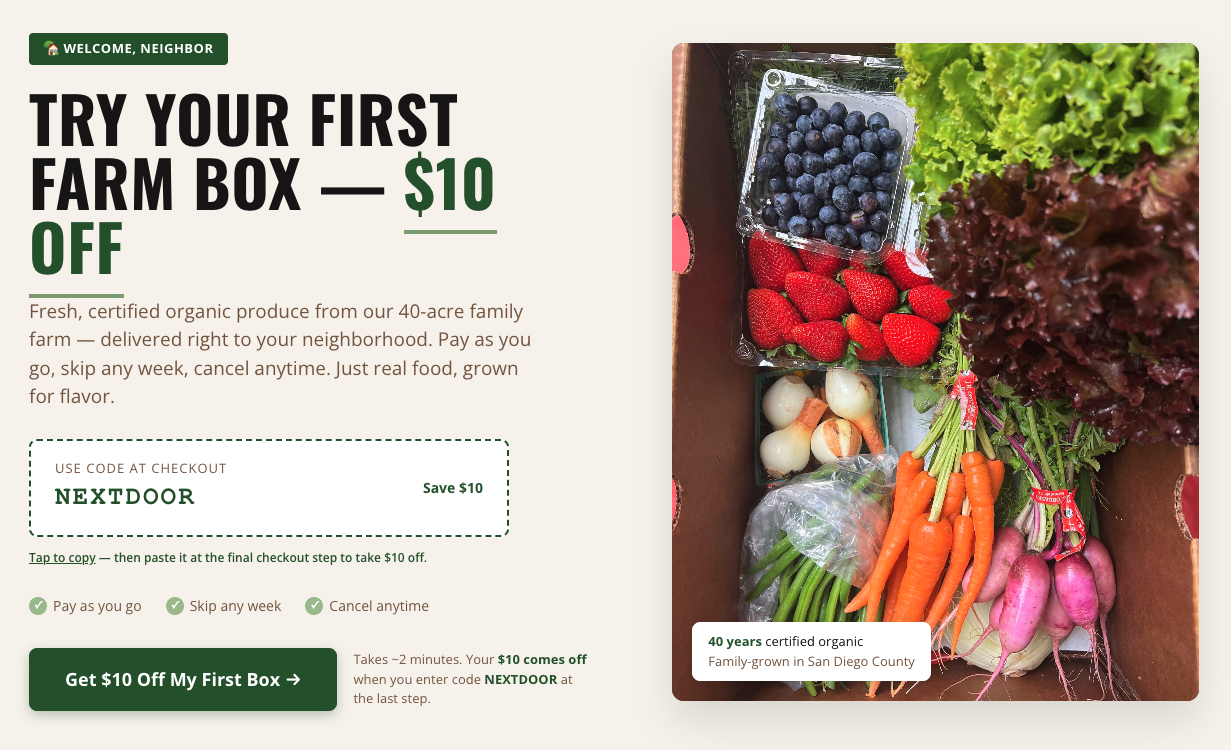
Put a channel-specific promo code and UTM tags on your link before you launch.
This is the part most farms skip, and it's the one that nearly cost us the whole read on this campaign. Nextdoor's own tracking missed every single signup. If we'd trusted the dashboard, we'd have called it a failure and shut it off. The promo code caught them all — that's how we know it's actually paying back $18.40 on the dollar. Without a code and UTMs, you're flying blind, and every dollar you spend before tracking is in place is a dollar spent learning nothing.
Should you add Nextdoor?
Honest answer: only if the rest of your system is ready to catch what it shakes loose. Add it when four things are already true.
- Your landing page converts. We learned this the expensive way — the first weeks had great clicks and almost no signups, because the page didn't match the ad's promise. Fix the page first, or you're paying to fill a leaky bucket.
- You already show up in the community. Farm tours, market booths, a recognizable box on porches. If neighbors have seen you before, the ad reads as "oh — them, finally." If they haven't, it's just another ad.
- You can track it. A promo code and UTMs, at minimum. See step 5.
- You have a real budget. This isn't a five-dollars-here-and-there channel. Our sweet spot with JR has been about $100 a week — enough to stay in front of the same neighborhoods consistently, which is the whole mechanism.
Missing one of these components isn't a failure — it's a stage. There are channels that fit that stage better: your email list, an organic Nextdoor post, print in your pickup neighborhoods, a referral offer to current members. Paid ads amplify a machine that already works. They don't build the machine.
But when the machine is there, a platform everyone else is ignoring will quietly hand you two new neighbors a week — and the neighborhood does the rest of the selling for you.
💌 Want tips and insights like this every week? Get our newsletter
Related Content
Get the story in your inbox every week.
Real success stories from working CSA and dairy farms–delivered every week (free).
Read by 5,000+ farmers every Friday