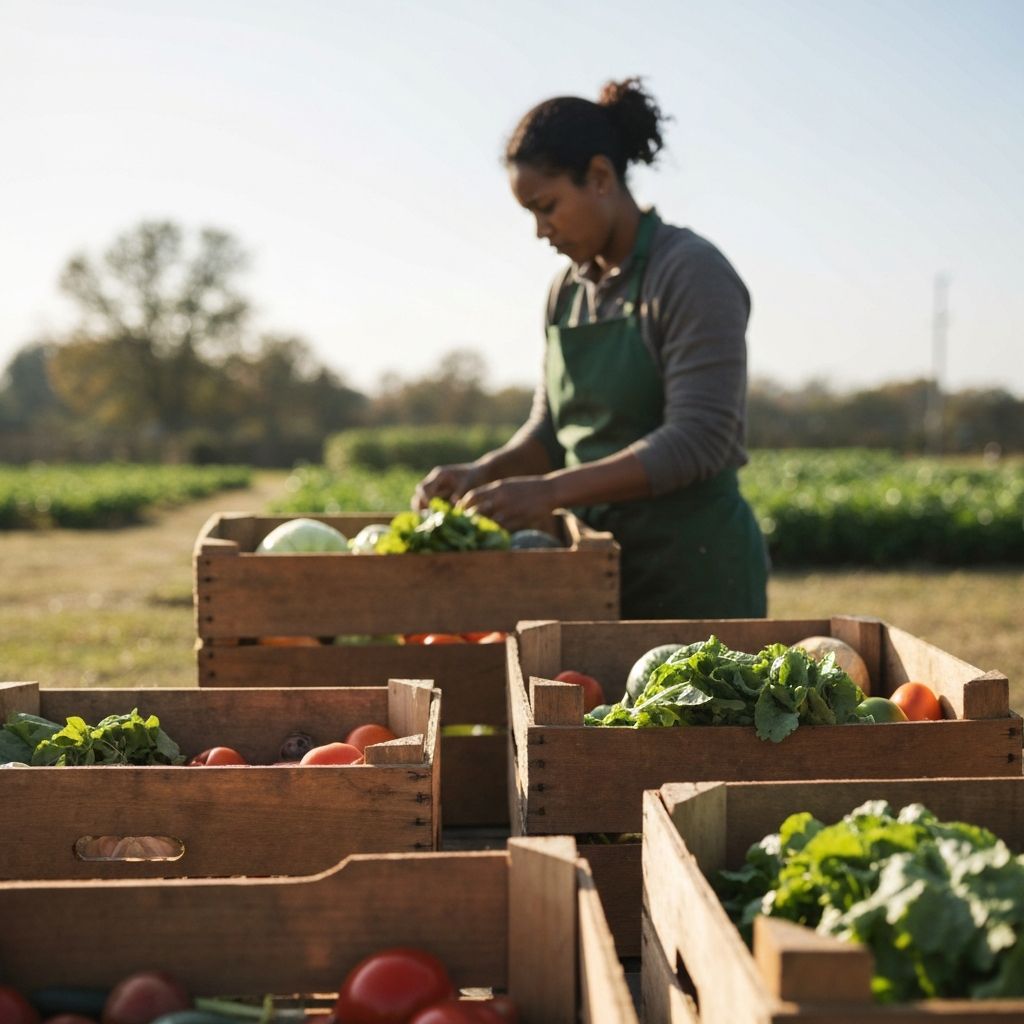
How 3 Veteran Farmers Run High-Retention Subscription Programs at Scale

Watch the full 70-minute panel discussion on-demand
Running a CSA or farm share subscription program at scale is not a simple task. It's not just about growing vegetables or raising animals—it's about consistently delivering on a promise to your members week after week, year after year.
We sat down with three veteran CSA operators who've cracked the code on scaling subscription programs while maintaining the retention rates that make them profitable. Here's what they shared about what actually works.
The Real Challenge With Scale
Scaling a CSA isn't about adding more boxes. It's about maintaining quality, consistency, and trust while your operation grows.
The three growers in our panel each run subscription programs ranging from 200 to 1,200 active members. They've faced the same pressure you're probably facing: more demand than supply, tighter margins, and the constant question of how to keep members happy when production fluctuates.
Production at Scale: Quality Over Volume
The first insight: your members care more about consistency than variety.
One of the panelists runs a 400+ member CSA and has deliberately narrowed their crop rotation. Instead of growing 30+ vegetables, they focus on 15 core crops that perform reliably in their climate. This isn't limiting their success—it's the foundation of it.
Why? Because consistency builds trust. Members who know they'll get good tomatoes, lettuce, and carrots every week are more likely to renew than members who get surprised with unfamiliar crops they have to figure out how to use.
The second insight: build your schedule around your production capacity, not the other way around.
Another panelist shared that early in their CSA, they tried to offer too many distribution windows—Monday pickup, Wednesday delivery, Friday pickup. The complexity nearly killed their operation. They simplified to two consistent windows per week, and it reduced chaos while actually increasing retention because members knew exactly when to expect their box.
Fulfillment: Systems Over Heroics
The panelists were unanimous on this: the moment you stop packing boxes yourself, your operation changes fundamentally.
Systemize packing before you scale.
Even if you pack boxes today, document how you do it. Create packing lists, standardized weights, and quality checks. When you hire staff to pack, they need a system, not intuition.
One panelist moved from 200 to 800 members by hiring a part-time pack coordinator. That person didn't need to be a farmer—they needed to follow a system. The result: consistent boxes, fewer complaints, and the owner freed up to focus on production and member communication.
Pick-up and delivery logistics matter more than you think.
The panelists who invested in clear communication about pickup locations, times, and procedures had far fewer member issues than those who left logistics vague.
One successful operator uses a simple system: members choose their pickup day and location at sign-up. There's no flexibility on timing (it disrupts packing schedules), but there's absolute consistency. No surprises. No last-minute scrambling.
Retention: The Real Profit Driver
Here's what surprised most of the panelists when they looked at their numbers: a 10% increase in retention rate is worth 3-4 times more than a 10% increase in membership.
Why? Acquisition costs are high. A member who stays 3 years instead of 1 is exponentially more profitable.
The three tactics that actually work:
- Communicate proactively about what's in the box. One operator sends a weekly email 48 hours before pickup explaining exactly what's in the box, how to store it, and recipe ideas. This simple habit reduced complaints by 40% and increased retention by 12%.
- Make it easy to skip or pause. Counter-intuitively, panelists who allow members to pause or skip weeks have higher annual retention than those who enforce strict commitment periods. Why? Because life happens. Giving members control reduces resentment.
- Solve complaints within 24 hours. When a member complains about a bad bunch of lettuce or missing item, the fastest-growing operations respond the same day with a credit or replacement. This builds loyalty that offsets the cost of the replacement.
The Money Conversation
All three panelists were transparent about pricing: you cannot run a profitable CSA at scale on razor-thin margins.
The successful ones price their boxes to cover:
- Production costs (seeds, labor, equipment)
- Packing and logistics
- Admin and customer service
- Bad weeks (crops fail, shrinkage happens)
- A reasonable profit margin
The panelists' price per box ranged from $35 to $55 depending on location, season, and box size. All of them said the biggest mistake they made early was pricing too low to cover these real costs.
Dynamic pricing also works at scale. One panelist offers 3 box sizes and adjusts seasonal pricing to account for higher costs in shoulder seasons. This approach gives members choice while protecting margins.
The Tech Stack Question
One of the most practical conversations was about tools. All three panelists use some form of subscription management software, but they were clear: the software doesn't matter nearly as much as having a system.
Whether you're using a spreadsheet, Farmhand, or a full e-commerce platform, what matters is:
- Members can sign up and manage their account easily
- You know exactly who's subscribed, who's paused, and who's at risk of canceling
- You can communicate with members without manual email lists
- You have a clear picture of revenue and cash flow
The panelists who had the most headaches early were those who delayed investing in any system, thinking they could manage it by hand. By the time they implemented something, their member database was a mess.
Real Stories From the Scale Journey
One panelist shared: "When we hit 300 members, I was losing sleep. Everything felt like it was going to break. We hired one person to help with packing, and suddenly I had time to think again. That one hire unlocked our ability to grow to 600 members."
Another: "We tried to be everything to everyone—different box sizes, custom options, multiple pickup times. We had 250 members and were exhausted. We simplified the offering to 2 box sizes and 2 pickup times. We lost about 30 members in the transition, but our retention rate jumped from 60% to 78%. The math worked."
The third: "Don't wait to invest in communication. Start sending weekly emails to your members when you have 50 subscribers, not when you have 500. The habit is easier to build early."
Your Next Step
If you're running a subscription program, the panelists agreed on one thing: know your numbers and be willing to make changes based on them.
Track your retention rate. Track your production costs. Track member feedback. Let the data guide your scaling decisions, not fear or hope.
Watch the full 70-minute panel discussion to hear the complete stories, specific numbers, and the nuanced challenges these operators faced as they scaled.
Watch the Full Workshop
Hear directly from three successful CSA operators about production strategies, fulfillment systems, retention tactics, and the financial realities of scaling a subscription farm program.
Watch the Panel DiscussionRelated Content
.jpg)


Get Content Like This Every Friday
Subscribe to our weekly newsletter to get farmer tips delivered to your inbox.